
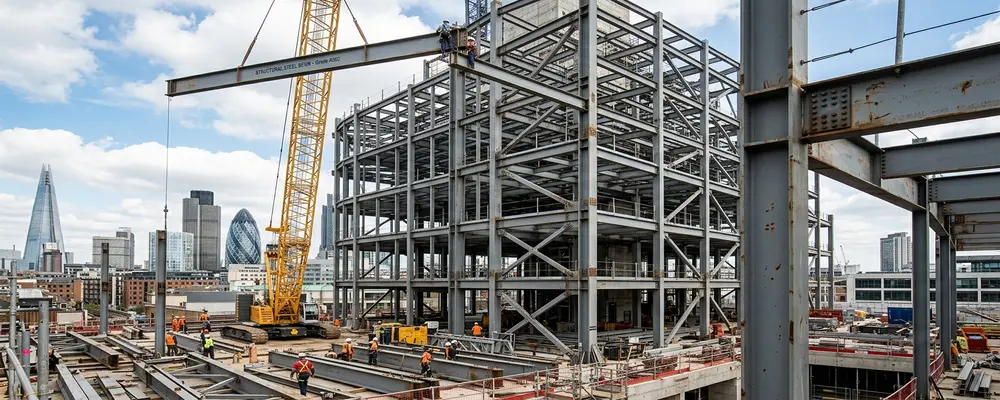
All the skyscrapers, bridges and warehouses that you are currently looking at were strong to structural steel. It supports buildings, bridges, rivers and the roofs of stadiums that can accommodate audiences of up to sixty thousand individuals. Whether you have a construction project, need to source material or are just wondering the reason why modern buildings are so tough, all this can be answered in this guide in plain and simple language.
At Four Steels, we deal with this material daily, thus we are aware of the questions asked by buyers, engineers and contractors. Lets break it down.
What Is Structural Steel?
But what is structural steel? Simply put, it is steel that has been molded into certain cross-sections and designed to support loads in construction. It is not like sheet metal or even the steel in appliances and car components. To ensure that it can carry heavy weight without bending, cracking or collapsing under pressure, manufacturers test and certify it to high standards.
It is popular with engineers as it is unusual, in that it has a combination of high strength, predictable performance and relatively low weight compared to concrete. The same weight can be loaded on a steel beam as on a far larger beam of concrete, thus releasing usable space and, in many cases, reducing the total cost of the material.
The majority of this material begins as iron ore. It is melted down, impurities are eliminated, and to control the strength and plasticity, carbon, manganese or chromium is added. This is the nutshell of the steel manufacturing process and it defines nearly all aspects of the performance of the finished product at a job site.
How Is This Material Made?
Understanding the production aspect would answer why the quality of suppliers differs so much. Raw steel is processed into steel material used in building construction in two primary directions.
The process of Steel production starts in a furnace where raw materials are heated at high temperatures. When the mixture attains the correct chemical formula, it is poured into slabs, blooms or billets by the mills. It is then subjected to one of two shaping techniques:
- Hot rolled steel: through rollers and is very hot, over 1,700°F. It is an efficient and cost-effective process, and it creates bigger parts such as beams and channels.
- Cold formed steel: formed at room temperature and made of finer coils of steel. This process forms accurate, consistent sections commonly employed in lighter framing.
After shaped the material is then transferred to steel fabrication where it is cut, drilled, welded and assembled into the exact components required in a project. The quality of fabrics is as important as the raw material. Even an otherwise strong beam can be made by a poorly manufactured beam that can step down the whole structure despite the strength of the base metal.
An Overview of the Most Common Types of Structural Steel
Types of Structural Steel and the choice of which one to use is determined by the load demand, budget and design intent. The following is a list of the most commonly used shapes by contractors and engineers.
Hot-Rolled Sections
These are the horses of construction. The common shapes that you will find on any job site are the result of hot rolling:
- I-Beams: the most common shape which is used in framing both the floor and the roof.
- H-Beams: even larger than I beams commonly found in columns.
- Angles (L-Shapes): utilized in bracing, supports and connections.
- Channels (C-Shapes): These are used in framing and other light support constructions.
- Structural Tubing: hollow columns and architectural sections made of squares or rectangles.
Cold-Formed Sections
This type is lighter and thinner yet powerful enough to be used in a variety of applications:
- Steel studs: Commercial and residential buildings have wall framing made of steel studs.
- Purlins: metal building support, roof and wall paneling.
- Track and channel: used with studs in light-gauge framing systems.
Plates and Bars
Base plates, gusset plates and connection points where the beams and columns come into contact with each other are made of flat steel building material.
All structural steel structures you have ever entered, a parking garage and a football stadium, etc., are all made of these simple forms, with different arrangements and connections designed and engineered. When you have mastered the shapes, the rest of the design process becomes much easier to comprehend.
Common Grades You Should Know
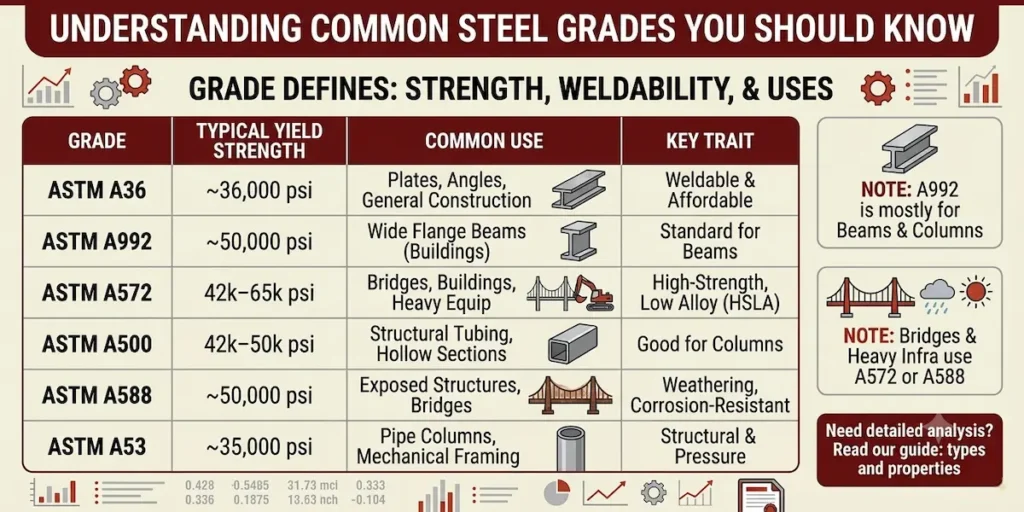
Grade defines the strength, weldability and the uses that a piece of steel best fits. Making an incorrect grade may cost you a lot of money so this is the one aspect that you should be sure of before you place an order.
| Grade | Typical Yield Strength | Common Use | Key Trait |
| ASTM A36 | ~36,000 psi | General construction, plates, angles | Highly weldable, affordable |
| ASTM A992 | ~50,000 psi | Wide flange beams | Standard for modern beam construction |
| ASTM A572 | 42,000–65,000 psi | Bridges, buildings and heavy equipment | High-strength and low alloy |
| ASTM A500 | 42,000–50,000 psi | Structural tubing, hollow sections | Good for columns, architectural framing |
| ASTM A588 | ~50,000 psi | Exposed structures, bridges | Weathering steel and corrosion-resistant |
| ASTM A53 | ~35,000 psi | Pipe columns, mechanical framing | Works for both structural and pressure use |
A992 is currently mostly used in beams and columns of commercial buildings since it is a good balance between cost and strength. Bridges and heavy infrastructure are frequently raised to A572 or A588 to provide additional resistance to fatigue and exposure to weather over decades of service.
When you are sourcing material and you need a more detailed analysis of the grades, properties and industrial uses of various types of steels, our complete guide to steel types and properties breaks it down into greater detail.
Steel Structure Applications Across Industries
A steel structure isn’t limited to office towers. One can find this material in many more places than some may think:
- Commercial properties: offices, malls, warehouses and high rises.
- Bridges: highway overpasses, pedestrian bridges and railway crossings.
- Industrial facilities: factories, refineries and processing plants.
- Stadiums and arenas: huge clear-span roofs which are carried by steel trusses.
- Residential building: modern homes and apartments, light steel framing.
- Parking structures: multi-storey garages which require open and column-light structures.
- Renewable energy: wind turbine tower and solar mounting frame.
These projects are mostly constructed with construction steel since it can be used to make long spans, assemble quickly and erect taller buildings without overloading the foundation. An all concrete building would require significantly thicker walls and columns which would cannibalize the floor space. The steel frame is also designed to be more resistant to seismic movement as steel bends rather than breaking under the impact of sudden pressure.
Why Builders Keep Choosing It?
Why does an engineer continue utilizing the same material project after project? There are some reasons that are prominent.
1. Strength-to-Weight Ratio
Steel supports more weight per pound than practically any other conventional building material. This implies reduced size of columns, lighter bases and an open floor plan to designers.
2. Speed of Construction
In fabricators, the parts are assembled off-site under controlled conditions. Pieces are then assembled on-site by the team through bolting or welding and the construction timeline is cut by weeks or even months as compared to cast-in-place concrete.
3. Predictability and Consistency
Since this type of steel building material is produced to a high standard, the engineers can determine precisely how it will act under stress. Guesswork is much less than it is with materials that change with each batch, such as poured concrete.
4. Sustainability
Steel is one of the most recycled materials in the world. According to industry statistics the content of these steel products that is recycled usually falls to 90-98% and nearly all that is again recyclable when the building is at the end of its life.
5. Durability
Well-maintained steel buildings can be used much longer than 100 years. Corrosion resistant weathering grades such as A588 are easy to maintain over time with no paint required to make it more economical.
6. Design Flexibility
It is possible to achieve greater spans, higher structures and more exaggerated forms with steel than with most other materials. Open floor plans, cantilevers and curved roof lines are all easier to accomplish.
7. Cost Efficiency Over Time
The costs of raw materials vary with the market, but quicker construction, reduced waste and reduced long term maintenance can make this choice more cost-effective over the entire life of a project.
8. Fire Safety, With the Right Protection
Steel itself doesn’t burn but it does lose strength at high temperatures. This is taken care of by modern fireproofing coating and encasements and the vast majority of building codes have specific and well-tested requirements regarding fire-rated assemblies.
Steel Compared to Other Building Materials
| Factor | Steel | Concrete | Wood |
| Strength-to-weight | Excellent | Moderate | Low to moderate |
| Construction speed | Fast | Slow | Fast (small scale) |
| Span capability | Long spans | Shorter spans | Limited |
| Fire resistance | Needs fireproofing | Naturally resistant | Combustible |
| Recyclability | Very high | Low | Moderate |
| Best for | High-rises, bridges, industrial | Foundations, low-rise | Residential, small builds |
No single material wins in every category. Most large commercial projects actually combine steel framing with concrete foundations and floor slabs to get the best of both.
How To Choose The Right Steel For Your Project
The appropriate material is narrowed down with a few practical questions:
- What are the loads that the structure will bear? Higher grades such as A992 or A572 would normally be required to support heavier loads.
- Will it be subjected to the weather? In case yes, think of weathering grades or an appropriate coating system to retard corrosion.
- What’s the project timeline? Hot-rolled sections may be more readily available in standard sizes, and this may reduce lead times.
- What’s the budget? A36 is still a cost-effective option in general framing where the strength is not necessary.
- Is the design hollow-sectioned? Columns and exposed architectural steel can be worked with structural tubing (A500).
- Who is making it up? A competent fabricator who has the required certifications will mitigate the chances of mistakes made in the welding and assembly process.
Making such incorrect decisions does not only result in monetary loss, but could pose real safety hazards in the future. Provided that you are sourcing stainless steel plates as well in a project, you may want to examine the most prevalent buyer mistakes initially. Our article on the mistakes to avoid when buying stainless steel plates takes us through the most common, very expensive mistakes.
How Steel Sections Connect
Connections are the only thing that makes a frame complete and strong. The Fabricators are normally connected to steel building material through one of the three methods:
- Bolting: Fast, reversible, and typically used in the field where crews lay the frame together on the ground.
- Welding: This is a permanent, rigid joint normally employed during shop fabrication prior to components being shipped to the field.
- Riveting: This is mostly a thing of the past; however, in older structures, it may still be seen.
A combination of shop welding and field bolting is used in most of the modern projects. Welding occurs in the managed setting of a fabrication shop where quality controls are more manageable and bolting accelerates on-site construction and minimizes the use of hot work at height. Connection design also influences the behaviour of a structure in the event of an earthquake or strong wind and engineers use real time to ensure that this detail is correct.
Common Mistakes to Avoid
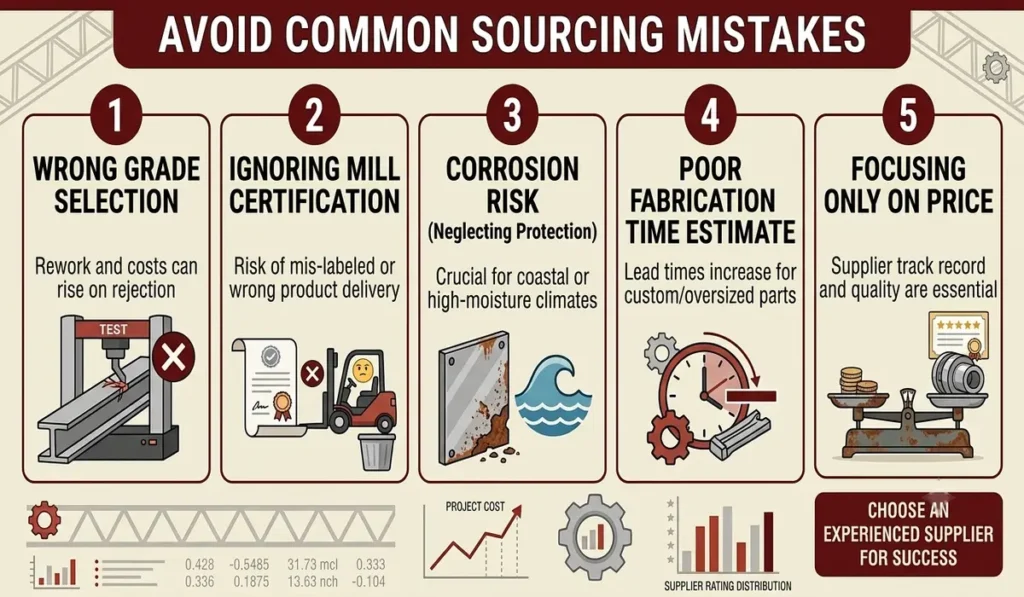
Also, experienced buyers get themselves into unnecessary trouble when attempting to source this material:
- Placing a wrong grade that the intended load requires, thus resulting in costly rework in the future.
- Bypassing mill certification inspections may result in bad or mislabeled product.
- Neglecting the protection of corrosion in coastal or moist climates.
- Not estimating enough lead time on fabrication, particularly on custom or oversized parts.
- Selecting a supplier based on price without verification of track record or quality control.
With an established supplier who knows the technical specs of a job site and the realities of a job site, you can avoid most of these pitfalls altogether.
What Affects the Price?
Customers usually inquire why the prices of suppliers are so different for what appears to be the same product. The gap is typically due to a few factors:
- Raw material prices: World scrap and iron ore prices are changing every month and they directly enter into mill prices.
- Section size and grade: The heavier sections and stronger grades are more expensive per ton.
- Complexity in fabrication: Custom cuts, drilling patterns and welding add labor hours.
- Transportation: The long-span beams and oversized sections may require special freight.
- Volume of orders: Larger orders normally provide a better per ton price.
Requesting a quote with more than one supplier and requesting them to break down the material or fabrication cost will often provide a better idea of where the money is actually going.
Final Thoughts
It is not a simple building product but is the foundation of almost all of the big buildings that we need in everyday life. From the beams of a warehouse to the trusses of a stadium roof, the knowledge of the various shapes of steel, their grades and how each is used properly will aid you in making better decisions on any project.
As an engineer specifying a material, a contractor sourcing a supply or a business owner planning a new facility, the correct choice of grade and section shape will have a quantifiable difference in cost, schedule and long life. At Four Steels, we assist our clients in configuring the correct structural steel for the correct job but based on actual industry experience not a hunch.
Frequently Asked Questions:
Are structural steel and stainless steel similar?
No. It is often carbon steel that is selected due to its strength and cost. Stainless steel is a corrosion resistant alloy that includes chromium and is much more expensive and is used in other applications.
What is the life span of a steel building?
Properly designed and maintained steel framed buildings usually have a service life of 50 to 100 years or more and numerous industrial buildings dating back to the early 20th century still exist today.
Is this a recyclable material?
Yes. Steel can be recycled and none of its strength or quality is lost. Hence the reason it is a choice in green construction by all means.
Which is better between hot-rolled and cold-formed steel?
Hot-rolled steel is worked at high temperatures and is utilized on larger pieces such as beams. Cold-formed steel is shaped at room temperature and typically used for lighter framing like studs and purlins.
Which is the most common grade used in commercial buildings?
ASTM A992 wide flange beam is the standard grade of beams used in most commercial construction in the US today.
Does it rust?
Yes, without any coating, carbon steel may rust in the presence of moisture. Corrosion can be controlled over decades by painting, galvanizing or selecting a weathering grade such as A588.